Now available on LeanPub
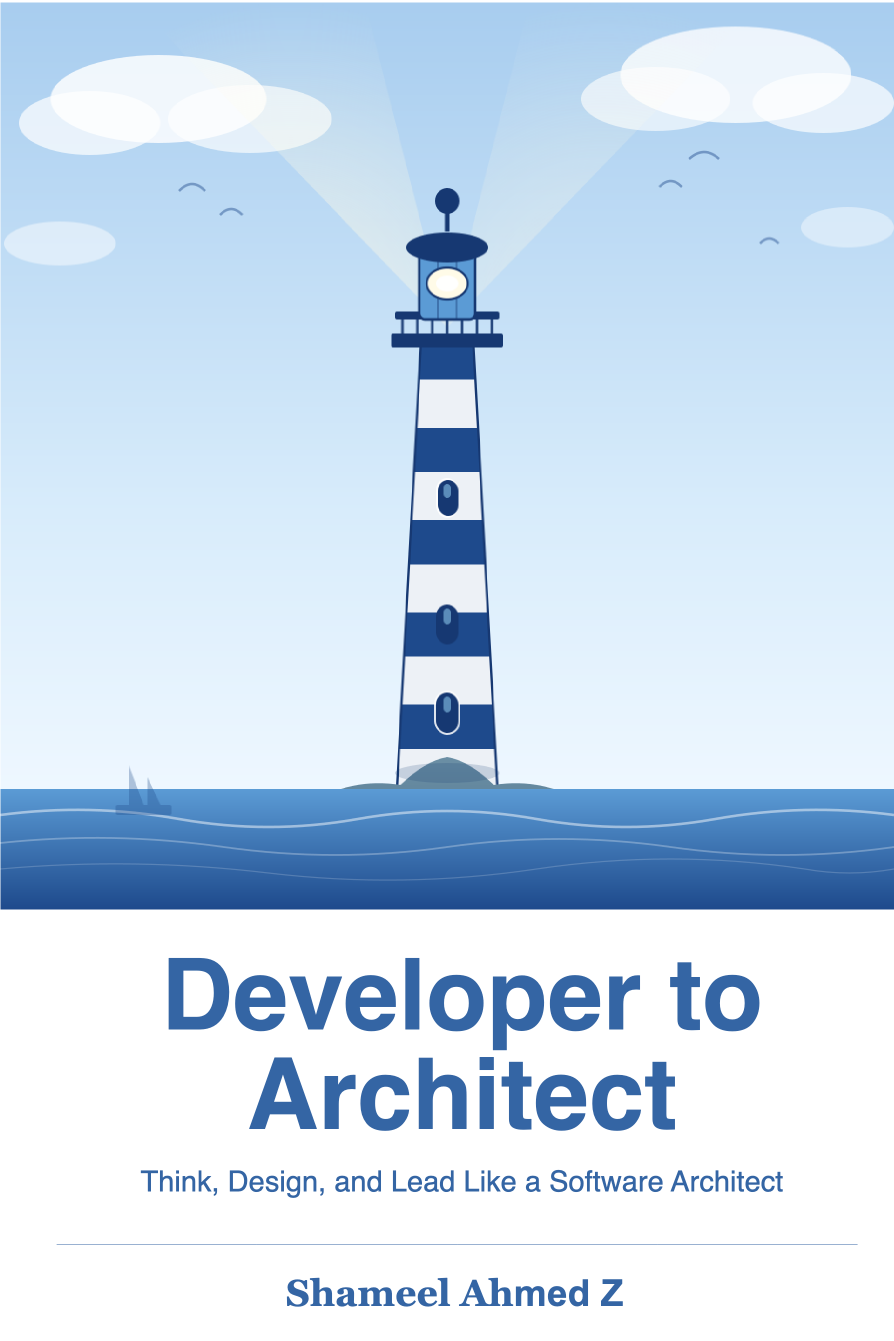
Think, Design, and Lead Like a Software Architect
Most architecture books teach you how to design systems. This one teaches you how to become the person who designs them. A practical guide for experienced engineers navigating the hardest career transition in software.
About the Book
The transition from developer to architect is not a promotion. It is a change in how you think, what you prioritize, and how you work.
Developers solve problems. Architects define them. Developers optimize for what works now. Architects balance what the business needs today against what the system will need in three years. That shift in orientation is rarely taught and almost never documented in the technical literature, which focuses on patterns and principles but not on the human and organizational transformation the role demands.
Developer to Architect closes that gap. Written by a principal and staff architect with twenty-four years of hands-on experience, it covers everything the job actually requires: the mindset shift, the technical depth, the craft of making good architectural decisions, and the organizational and human dimensions that most technical books do not address.
The examples come from actual problems. The advice is grounded in how the work is practiced, not how it is described in job postings. If you are a developer who wants to become an architect, or a new architect trying to understand what the role demands, this book closes the distance between where you are and where the work requires you to be.
What You Will Learn
Organized to take you from mindset to mastery, from technical foundations to organizational influence.
Part I
What architects actually do, the shift from solving problems to defining them, and how to start thinking in systems rather than in code.
Part II
Distributed systems, data architecture, APIs, scalability, security, compliance, observability, AI, and cloud architecture. Ten chapters of depth.
Part III
How to make architectural decisions, use patterns without dogma, modernize legacy systems, draw diagrams that communicate, and balance quality attributes.
Part IV
Governance structures that guide rather than gate, reference architecture patterns, and communication as the architect's primary tool.
Part V
Leading teams without a title, navigating stakeholder politics, and making trade-offs under pressure and time constraints.
Part VI
Closing the skills gap before you need it, navigating the transition inside your company, and a structured plan for your first ninety days.
Contents
Every chapter addresses a real dimension of the architect's role.
Free Downloads
Ten downloadable resources referenced throughout the book. ADR templates, architecture checklists, quality attribute worksheets, and more.
Browse All ResourcesThe Author
Software architect with twenty-four years of hands-on experience. Principal and staff architect across enterprise software, telephony platforms, data warehouses, and cloud migrations. Published in Red Hat, DZone, and CodeProject.
About the Authorlinkedin.com/in/zshameel